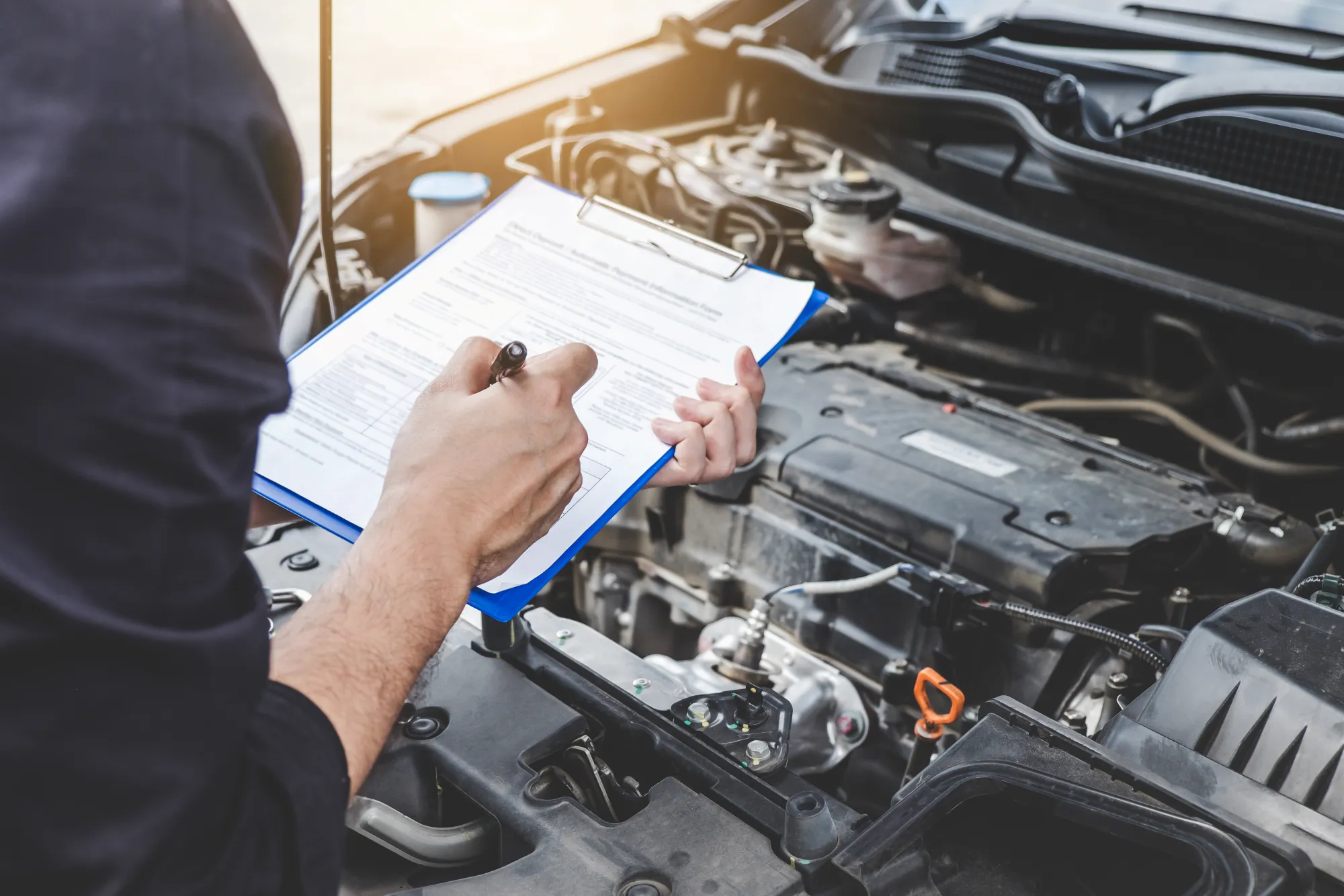
If your oil level is above full after an oil change in Sallisaw, OK, the reading may reflect how it was checked, or there may be excess oil in the engine. Verify it using the checking procedure in your vehicle’s owner’s manual before deciding the engine was overfilled.
If the level stays above the maximum under the correct checking conditions, stop adding oil and have the shop verify it. A confirmed overfill is corrected by removing excess oil and checking the level again. Don’t assume that a small-looking distance above the mark is acceptable for your engine.
How do I verify an above-full oil reading?
Start with the manual for your vehicle’s year, model and engine. Look for the engine-oil checking instructions, including the required temperature and waiting period. Avoid substituting a routine you learned on another vehicle.
For example, one Ford U.S.-market manual specifies a warm engine followed by a 15-minute wait with the engine off. The 2020 Chevrolet Silverado 4500HD/5500HD/6500HD manual recommends checking after at least two hours with the engine off, with different minimum waits if that isn’t possible. Those are examples of different procedures, not interchangeable instructions. Follow yours. (Ford oil-check instructions, Chevrolet owner’s manual)
For a vehicle with a dipstick, use this checklist alongside its manual:
- Check on level ground. A reading taken on a slope needs to be verified under the specified conditions.
- Use the required engine temperature and waiting period. Record both so the shop can understand your result.
- Wipe and reinsert the dipstick as directed. Seat it fully before taking the reading.
- Compare the oil level with the marked operating range. If the boundary is unclear, repeat the prescribed check rather than guessing.
- Put the dipstick back securely. Take a photo of a clear reading if you need to discuss it with the shop.
Look for a clear, repeatable reading above the specified range. If the result is inconsistent or difficult to read, tell the shop that instead of estimating how much excess oil is present.
What if my vehicle uses an electronic oil-level display?
Follow the manual’s conditions for getting a valid measurement. Don’t apply a dipstick procedure to a vehicle that checks its level electronically.
Also confirm that you’re looking at oil level, rather than the oil-life percentage. Chevrolet explains that its Oil Level feature reports oil volume; Oil Life is a separate maintenance indication. On equipped vehicles, the level display may take time to update after an adjustment and does not require a reset to reflect the changed volume. A reset of the oil-life reminder does not establish that the oil quantity is correct. (Chevrolet Oil Level guide)
Does a high reading prove the shop added too much oil?
A reading taken under uncertain conditions is a reason to recheck, not enough by itself to establish the cause. A repeatable reading above the manufacturer’s range needs attention, but the shop should verify both the level and why it is high.
Use the repeat check to decide what to report:
- The repeat check falls within range: report the original concern and the conditions that changed. Don’t remove oil solely because of the earlier reading.
- The repeat check remains above maximum: have the shop confirm the reading and correct the excess.
- You still cannot get a clear reading: ask for verification rather than treating uncertainty as proof that the level is fine.
Avoid choosing an arbitrary amount to drain based on a photo or comparing your dipstick with another engine’s. Ask the technician to verify the specified oil capacity for your exact engine, review the service record and establish the final level using the proper procedure.
What should I tell the shop?
When discussing an oil change in Sallisaw, give the shop observations it can reproduce. A useful opening is: “The oil reads above maximum after service. Here is how I checked it.”
Have these details ready:
- Vehicle identification: year, make, model and engine, if known.
- Service information: the invoice, service date and mileage.
- Checking conditions: where you parked, whether the engine was warm and how long it had been off.
- The result: whether it repeated, plus a clear photo of the dipstick or the exact electronic message.
- Anything added afterward: whether you or someone else added oil since the service.
- Other observations: warning messages, changes in engine operation, unusual-looking oil or a falling coolant level.
Be clear about timing. Did you first notice the high reading immediately after the change, or did the level rise later? That helps the shop decide what to verify next without assuming a cause.
Before driving back, describe the reading and any warning messages and ask how the shop wants the vehicle brought in. Follow the vehicle manual’s instructions for any warning shown.
How is overfilled engine oil corrected?
The correction is to remove excess oil and verify that the remaining level is within the manufacturer’s operating range. The shop should confirm the initial reading, remove oil as appropriate for the vehicle, then repeat the specified checking procedure.
Removing oil isn’t the last step. Ask for the verified level to be documented, along with any adjustment. If your vehicle uses an electronic measurement, allow the system to meet its checking conditions and update before considering the correction complete.
Don’t add more oil while investigating an above-full reading or plan to drive until the excess is used up. Chevrolet’s Silverado medium-duty manual warns that above-range oil can damage the engine and advises removing excess oil or limiting driving while seeking professional help. It does not establish a universal safe amount above full or a safe driving distance. (Chevrolet owner’s manual)
What if the level rises again after correction?
Report a renewed rise rather than repeatedly having oil removed without investigating it. Mention milky-looking oil or coolant loss at the same time.
A Detroit Diesel technical bulletin hosted by NHTSA notes that coolant contamination can accompany milky-looking oil and an above-recommended level on the engines it covers. That does not diagnose your vehicle from its appearance; it explains why those observations deserve further checking. (Detroit Diesel coolant-in-oil bulletin)
If you are also noticing a sweet smell or a falling coolant reservoir level, Lee’s explanation of coolant loss without a visible puddle can help you describe that additional symptom. Give the shop both concerns so it can distinguish a fill-level correction from an underlying problem.